
Peptide research has become an important area of modern biological science, particularly in studies involving muscle physiology, growth hormone signaling, tissue repair, metabolism, and cellular energy pathways.
Are u intarested to know about best peptides for muscle growth research? Researchers investigate different peptides to understand how specific signaling pathways may interact with skeletal muscle, protein metabolism, recovery mechanisms, and body composition. However, it is important to distinguish research interest from proven clinical effects. A peptide being studied in relation to muscle biology does not mean it is an approved or proven muscle-building treatment.
Below are 15 peptides and peptide-related research compounds available from Meditech Plus Australia that are relevant to different areas of muscle, metabolic, growth, and tissue research.
Research-use disclaimer: This article is provided for educational and scientific research information only. The compounds discussed are not presented as treatments, supplements, or recommendations for human use.
Here we go best 15 peptides for muscle growth research
1. IGF-1 LR3
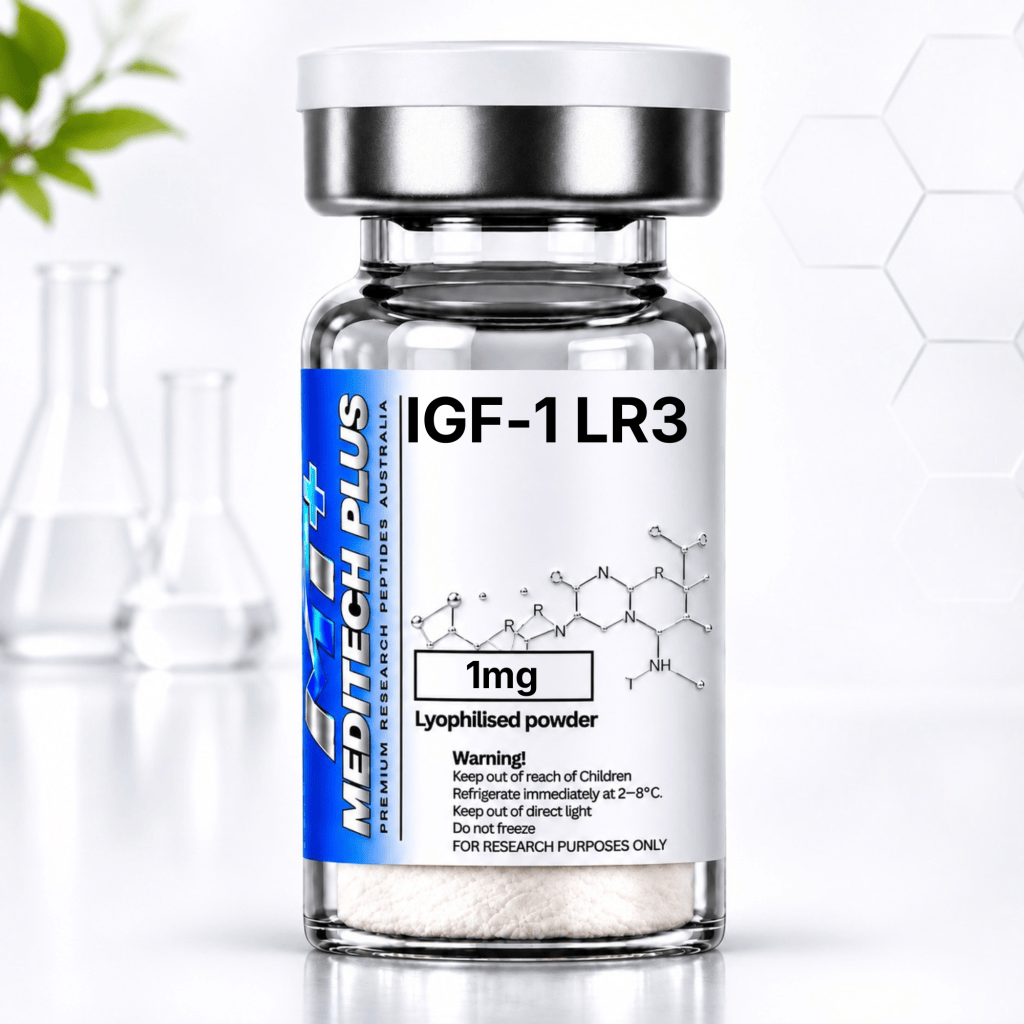
IGF-1 LR3 is a modified form of insulin-like growth factor-1 (IGF-1) that is widely discussed in research involving cellular growth and signaling.
IGF-1 pathways are particularly relevant to skeletal muscle research because they are involved in processes associated with cell growth, differentiation, and protein metabolism.
Researchers studying IGF-related pathways may investigate:
- Cellular growth signaling
- Muscle-cell biology
- Protein metabolism
- Growth-factor pathways
- Cell differentiation
2. CJC-1295 + Ipamorelin
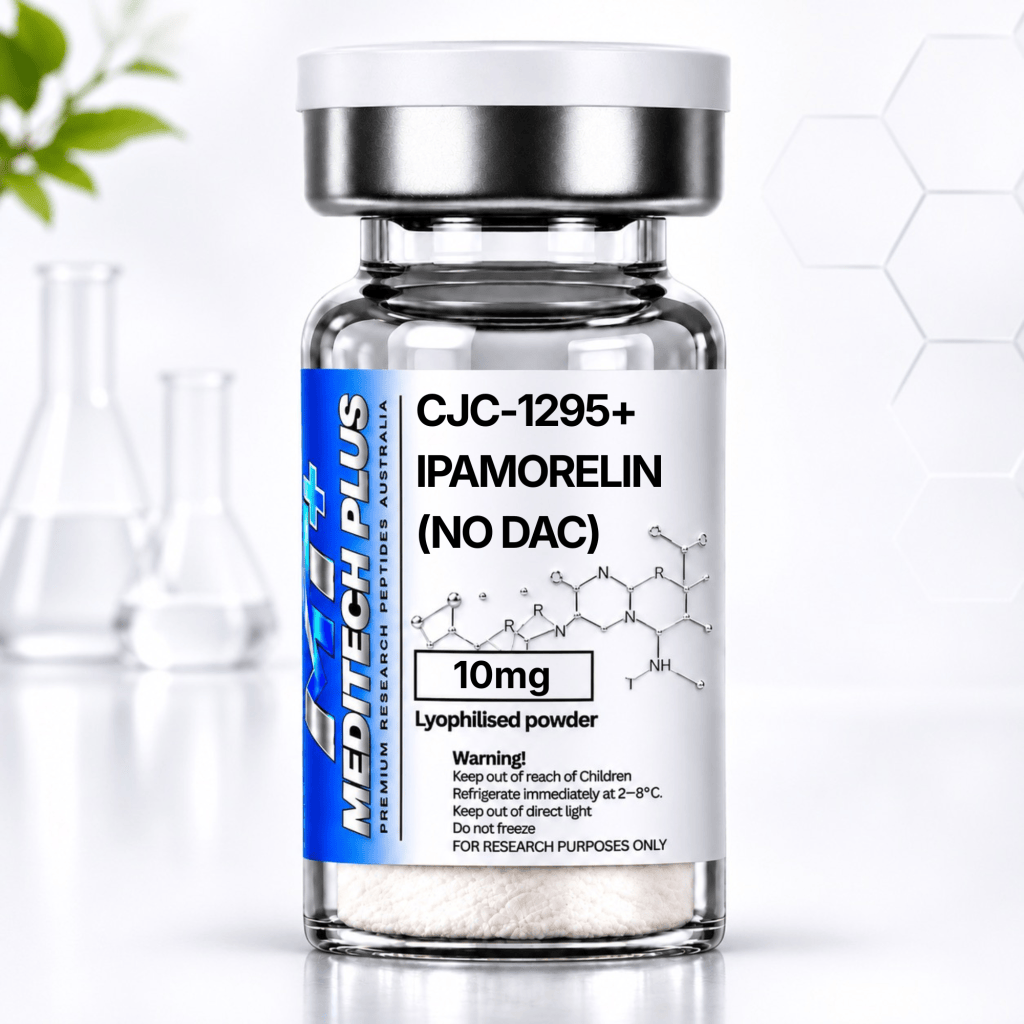
CJC-1295 + Ipamorelin is a combination frequently discussed in research involving growth hormone signaling.
CJC-1295 is associated with GHRH-related pathways, while Ipamorelin is studied as a growth hormone secretagogue. Researchers can therefore use these compounds as subjects when investigating different aspects of endocrine signaling.
Research areas may include:
- Growth hormone pathways
- Endocrine signaling
- Growth-factor regulation
- Muscle physiology
- Metabolic processes
3. Ipamorelin

Ipamorelin is a peptide studied primarily for its relationship with growth hormone secretion.
Growth hormone signaling is relevant to research into growth, metabolism, and tissue biology. As a result, Ipamorelin is often included in experimental discussions surrounding muscle and growth-related pathways.
Researchers may examine:
- Growth hormone signaling
- Hormonal regulation
- Secretagogue activity
- Metabolic pathways
- Growth-related biology
Meditech Plus Australia lists Ipamorelin 10mg.
4. GHRP-6
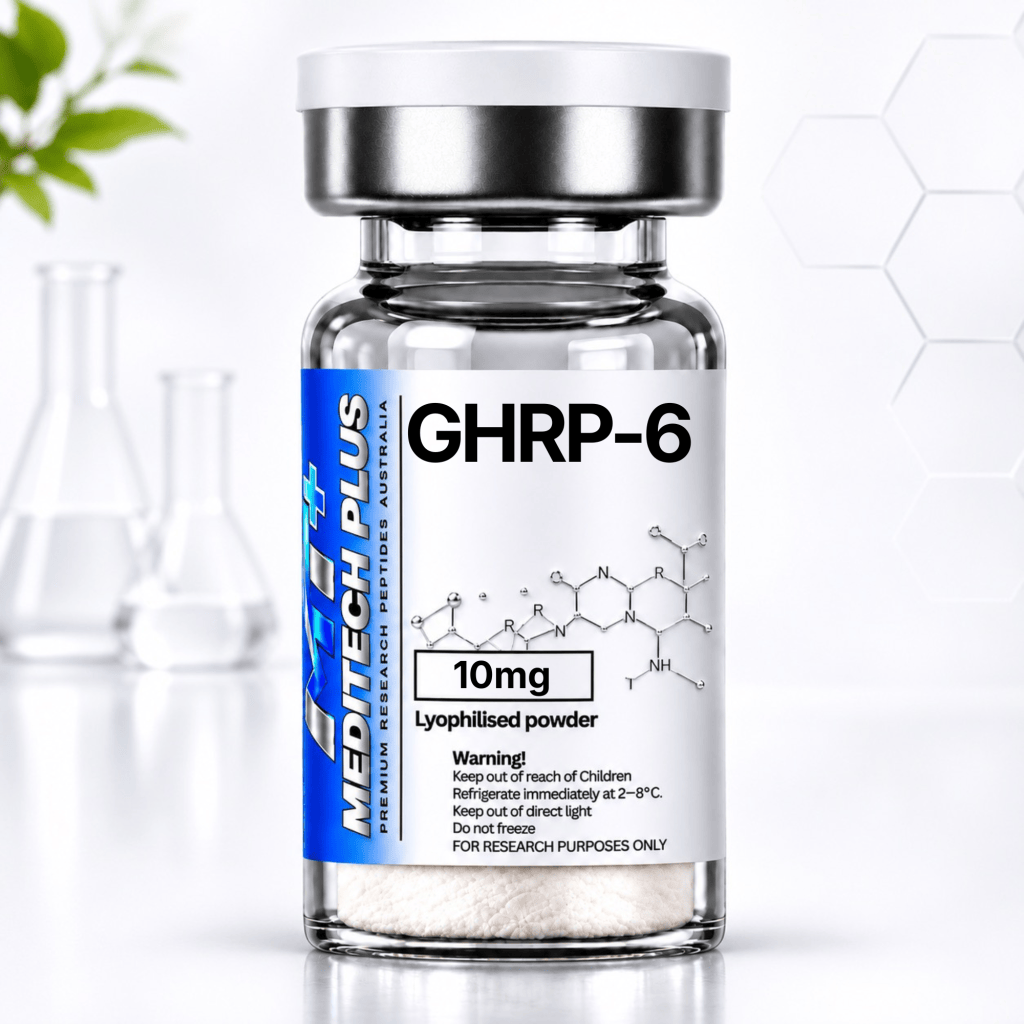
GHRP-6 is a growth hormone-releasing peptide studied for its interaction with pathways involved in growth hormone secretion.
Its research relevance comes primarily from endocrine and hormonal signaling rather than being considered a direct muscle-building compound.
Research topics can include:
- Growth hormone release
- Peptide signaling
- Endocrine regulation
- Metabolic pathways
- Growth-related mechanisms
Meditech Plus Australia currently lists GHRP-6 5mg.
5. Tesamorelin

Tesamorelin is a synthetic peptide associated with growth hormone-releasing hormone pathways.
Research involving tesamorelin has focused on endocrine signaling and body-composition-related mechanisms. These areas can be relevant to researchers studying the relationship between hormonal regulation and skeletal muscle physiology.
Potential research areas include:
- GHRH signaling
- Growth hormone pathways
- Body composition
- Metabolic regulation
- Endocrine biology
Meditech Plus Australia lists Tesamorelin 10mg.
6. BPC-157

BPC-157 has attracted considerable interest in preclinical research involving tissue biology and cellular processes.
Rather than describing BPC-157 as a direct muscle-growth peptide, it is more accurate to discuss its research relevance in areas such as tissue biology and experimental recovery models.
Researchers may investigate:
- Tissue-related pathways
- Cellular signaling
- Experimental recovery mechanisms
- Gastrointestinal research
- Connective-tissue biology
Meditech Plus Australia lists BPC-157 among its research products.
7. TB-500

BPC-157 + TB-500 Recovery Bundle

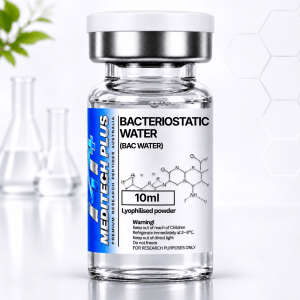
In stock
TB-500 is commonly associated with research involving thymosin-beta-related pathways.
Research interest around these pathways includes cellular migration, tissue remodeling, and repair-related mechanisms. This makes TB-500 relevant to researchers investigating tissue and muscle biology.
Areas of interest include:
- Cell migration
- Tissue remodeling
- Cellular signaling
- Repair-related mechanisms
- Muscle-tissue research
Meditech Plus Australia lists TB-500 10mg.
8. BPC-157 + TB-500 Recovery Bundle
BPC-157 + TB-500 Recovery Bundle
In stock
BPC-157 and TB-500 are also available together from Meditech Plus Australia as a BPC-157 + TB-500 Recovery Bundle.
From a research perspective, studying multiple compounds can allow researchers to investigate different biological pathways within the same research framework.
Relevant research areas include:
- Tissue biology
- Cellular signaling
- Repair-related mechanisms
- Muscle research
- Recovery models
It is important not to interpret the existence of a combination product as evidence that the compounds produce a clinically proven synergistic effect.
Meditech Plus Australia lists the BPC-157 + TB-500 Recovery Bundle.
9. MOTS-c

MOTS-c is a mitochondria-derived peptide that has generated research interest in metabolic regulation and cellular energy processes.
Skeletal muscle requires substantial amounts of cellular energy, making mitochondrial biology an important area of exercise and muscle research.
Researchers studying MOTS-c may examine:
- Mitochondrial function
- Cellular energy metabolism
- Metabolic signaling
- Exercise-related pathways
- Muscle energy regulation
Meditech Plus Australia lists both MOTS-c 10mg and MOTS-c 40mg.
10. AOD-9604
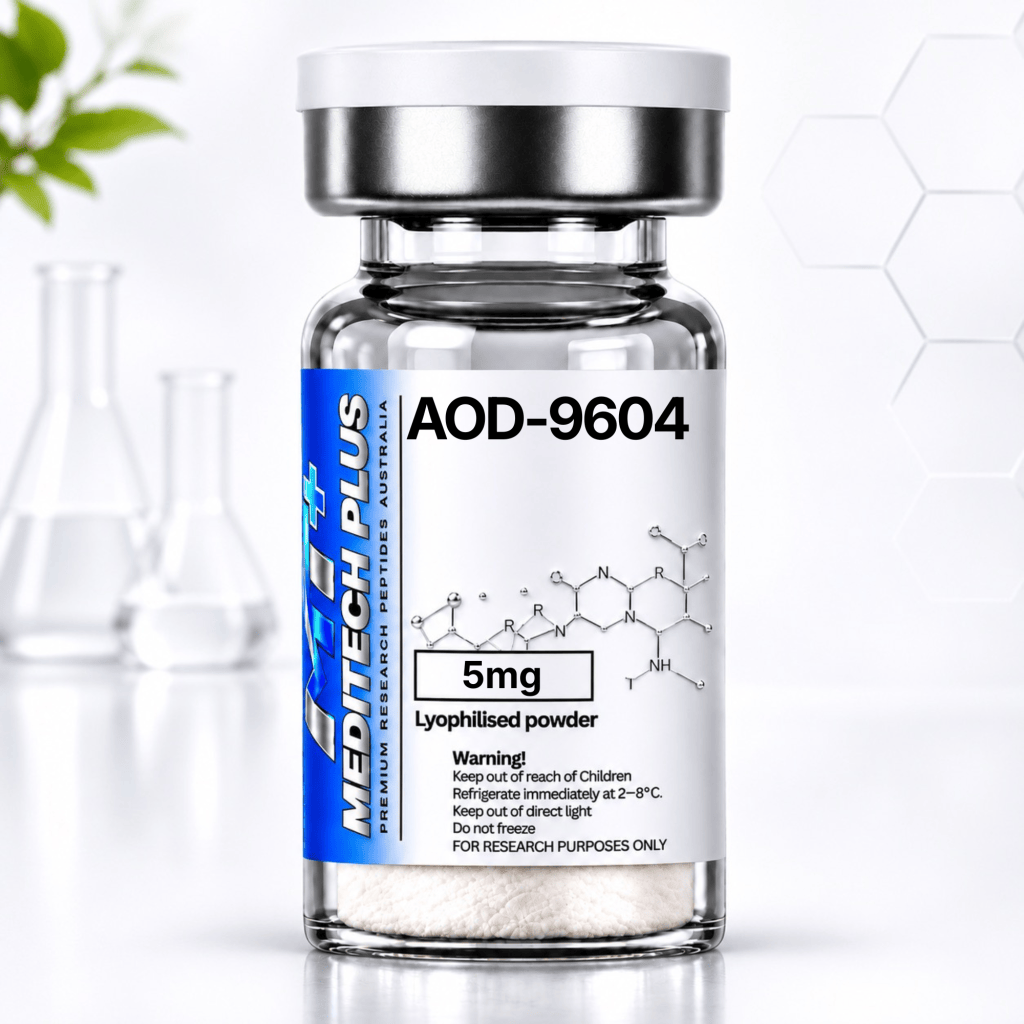
AOD-9604 is a peptide fragment derived from human growth hormone and has primarily attracted research interest in metabolic and lipid-related pathways.
Although it is sometimes discussed in fitness communities, its research profile should not automatically be interpreted as evidence of direct muscle growth.
Research areas include:
- Lipid metabolism
- Metabolic signaling
- Adipose biology
- Growth-hormone-related pathways
- Energy metabolism
Meditech Plus Australia lists AOD-9604 5mg.
11. Cagrilintide

Cagrilintide is an amylin analogue that is primarily studied in metabolic research.
Its relevance to muscle research is indirect, particularly where researchers investigate body composition, energy balance, and metabolic regulation.
Research topics include:
- Energy balance
- Appetite signaling
- Metabolic regulation
- Body composition
- Weight-related pathways
Meditech Plus Australia lists Cagrilintide 10mg.
12. Retatrutide

Retatrutide is a multi-receptor metabolic research compound associated with GLP-1, GIP, and glucagon pathways.
Research interest has focused heavily on metabolism, energy balance, glucose regulation, and body composition. These areas are relevant when researchers examine how metabolic changes may affect lean and fat mass.
Meditech Plus Australia currently lists multiple RETA products, including:
- RETA 10mg
- RETA 40mg
- Retatrutide 30mg Starter Bundle
13. Tirzepatide

Tirzepatide is a dual GIP and GLP-1 receptor agonist that has become an important subject of metabolic research.
For muscle-related research, researchers may be interested in how changes in energy balance and body weight relate to overall body composition, including lean mass.
Relevant research areas include:
- Glucose metabolism
- Energy balance
- Body composition
- Metabolic signaling
- Lean-mass research
Meditech Plus Australia lists Tirzepatide 10mg.
14. SS-31
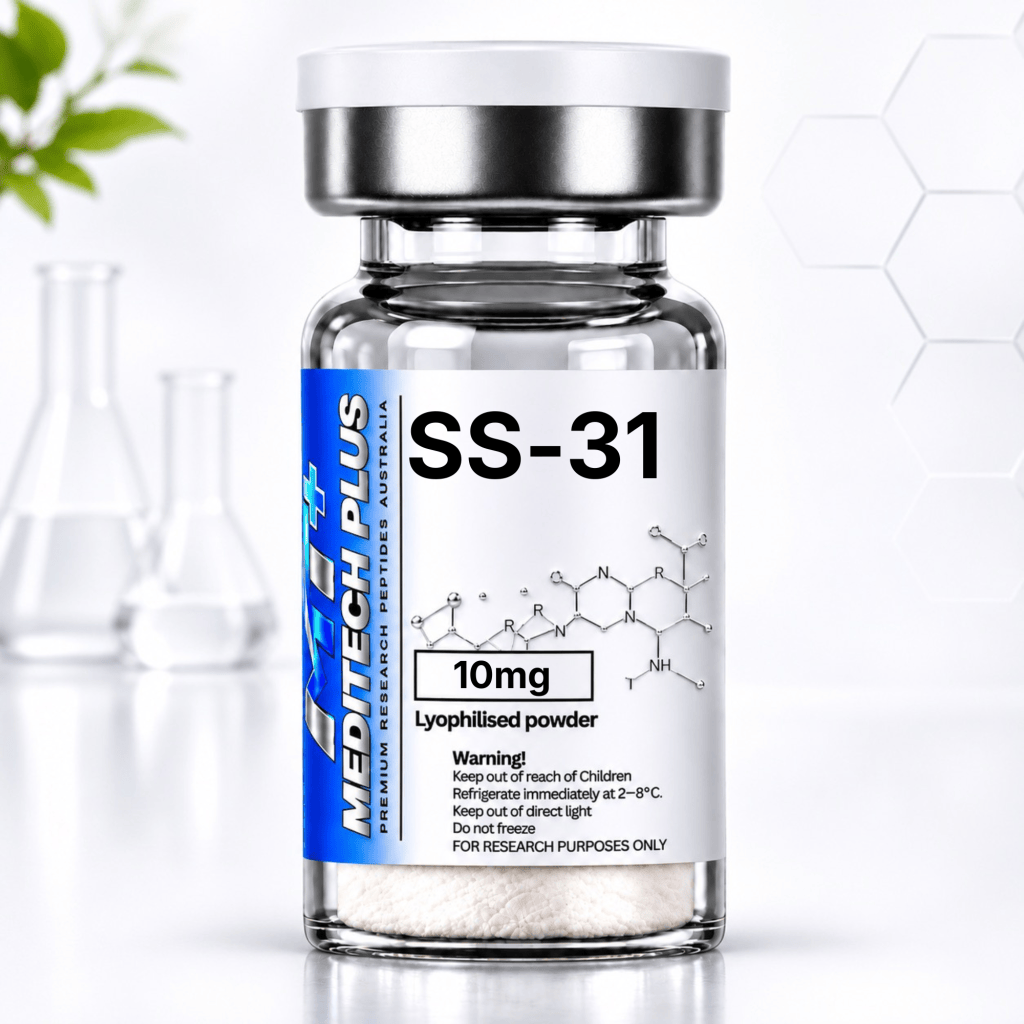
SS-31 is a mitochondria-targeted peptide that has attracted research interest in mitochondrial biology and cellular energy processes.
Because mitochondria play an essential role in skeletal muscle energy production, mitochondrial peptides can be relevant to research involving muscle metabolism and cellular function.
Research areas include:
- Mitochondrial function
- Cellular energy production
- Oxidative stress research
- Muscle metabolism
- Cellular physiology
Meditech Plus Australia lists SS-31 10mg.
15. GHK-Cu
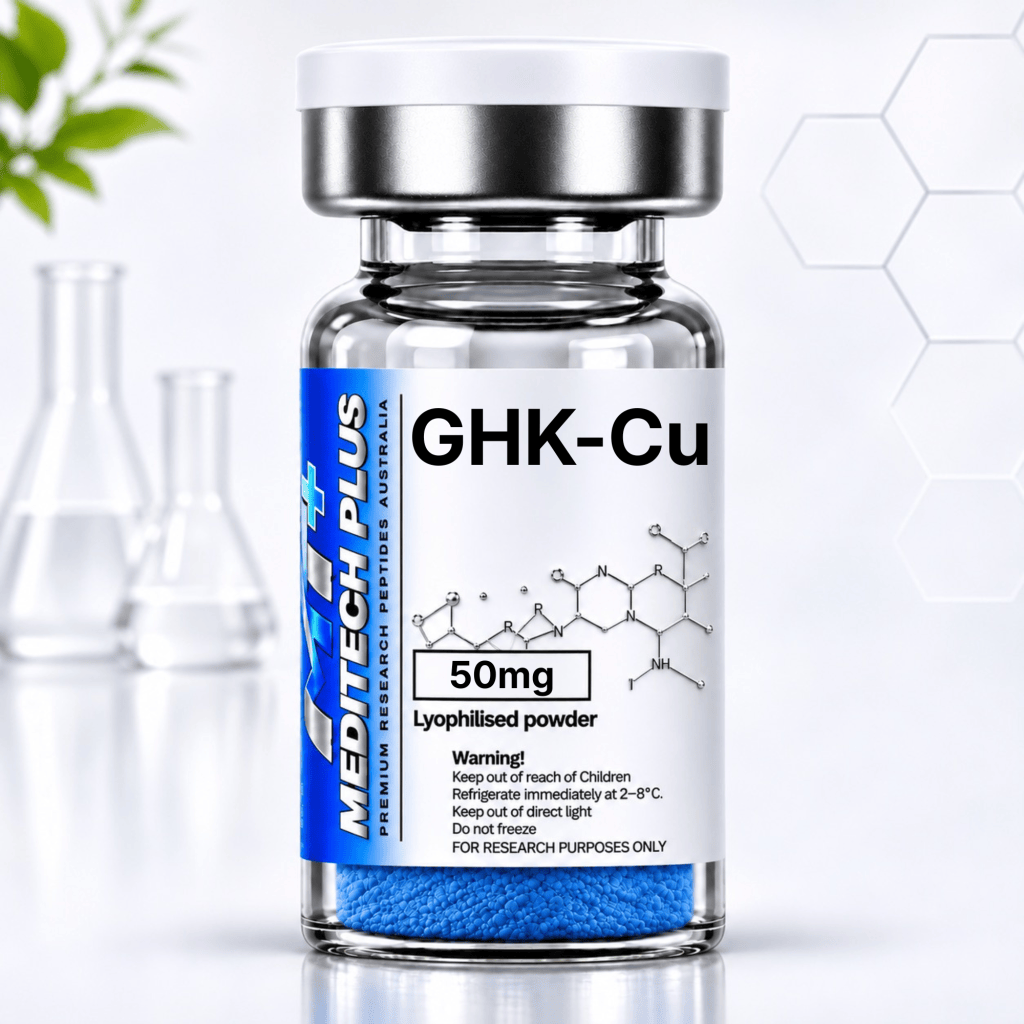
GHK-Cu is a copper-binding peptide studied in several areas of cellular and tissue biology.
Its research profile is broader than direct muscle-growth research, with studies often examining tissue biology, cellular signaling, and regenerative processes.
Potential research areas include:
- Cellular signaling
- Tissue biology
- Extracellular matrix research
- Wound-healing research
- Cellular regeneration
Meditech Plus Australia lists GHK-Cu 50mg and GHK-Cu 100mg.
How Peptides Are Studied in Muscle Growth Research
Muscle growth is a complex biological process involving multiple systems rather than one single pathway. Researchers therefore study peptides according to their individual mechanisms and biological targets.
Growth Hormone Signaling
Peptides such as CJC-1295, Ipamorelin, GHRP-6, and Tesamorelin are relevant to research examining growth hormone-related signaling.
IGF-1 Pathways
IGF-1 LR3 is associated with research into IGF-related cellular growth and signaling pathways.
Mitochondrial Function
MOTS-c and SS-31 are relevant to research involving mitochondria, cellular energy, and metabolic function.
Tissue Biology
BPC-157, TB-500, and GHK-Cu are more closely associated with research into tissue and cellular biology than direct muscle hypertrophy.
Metabolic and Body-Composition Research
Cagrilintide, Retatrutide, Tirzepatide, and AOD-9604 are primarily relevant to metabolic and body-composition research.
Are All These Peptides Directly Linked to Muscle Growth?
No.
This is an important distinction when discussing peptide research.
Some compounds are directly connected to growth-related signaling, while others are studied for metabolism, mitochondrial function, tissue biology, or body composition.
For example:
| Research Category | Examples |
|---|---|
| Growth hormone signaling | CJC-1295 + Ipamorelin, Ipamorelin, GHRP-6, Tesamorelin |
| IGF-related signaling | IGF-1 LR3 |
| Mitochondrial research | MOTS-c, SS-31 |
| Tissue research | BPC-157, TB-500, GHK-Cu |
| Metabolic research | Cagrilintide, Retatrutide, Tirzepatide |
| Lipid/metabolic research | AOD-9604 |
This classification helps prevent the common mistake of treating every research peptide as a direct muscle-building compound.
What Factors Matter in Peptide Muscle Research?
Researchers should consider several factors when evaluating peptides for laboratory studies.
1. Biological Mechanism
Understanding the molecular target and pathway is essential before interpreting research findings.
2. Research Evidence
Preclinical findings, animal studies, and human clinical research have different levels of evidence and should not be treated as equivalent.
3. Analytical Quality
Researchers should consider available analytical documentation, purity information, and testing methods when selecting research materials.
4. Regulatory Requirements
Research compounds may be subject to specific regulatory and laboratory requirements depending on the jurisdiction and intended application.
5. Research Context
A peptide studied for metabolism should not automatically be described as a muscle-growth compound simply because it appears in fitness-related discussions.
Frequently Asked Questions
What peptides are commonly studied in muscle growth research?
Research interest includes compounds associated with growth hormone signaling, IGF-related pathways, mitochondrial function, tissue biology, and metabolism. Examples available through Meditech Plus Australia include IGF-1 LR3, CJC-1295 + Ipamorelin, Ipamorelin, GHRP-6, Tesamorelin, BPC-157, TB-500, MOTS-c, and SS-31.
Which peptides are associated with growth hormone research?
CJC-1295, Ipamorelin, GHRP-6, and Tesamorelin are among the compounds commonly discussed in research involving growth hormone-related pathways.
Is IGF-1 LR3 a muscle-growth peptide?
IGF-1-related pathways are important subjects in muscle and cellular-growth research. However, research interest should not be interpreted as proof that IGF-1 LR3 is a safe or approved muscle-building treatment.
Are BPC-157 and TB-500 directly proven to build muscle?
No. These compounds are more appropriately discussed in the context of experimental tissue and cellular research rather than as proven muscle-growth treatments.
Why are MOTS-c and SS-31 relevant to muscle research?
Both are associated with mitochondrial research. Since skeletal muscle has high energy requirements, mitochondrial function is an important area of muscle physiology research.
Are Retatrutide and Tirzepatide muscle-growth peptides?
No. They are primarily associated with metabolic research. Their relevance to muscle research is more closely related to energy balance and body-composition research.
Conclusion
The relationship between peptides and muscle research is complex. Different compounds interact with different biological systems, including growth hormone signaling, IGF-related pathways, mitochondrial function, tissue biology, and metabolic regulation.
The 15 compounds discussed in this article represent different research categories rather than a single group of direct muscle-building agents.
For scientific researchers, the most useful approach is to evaluate each compound according to its mechanism of action, available evidence, research application, analytical quality, and regulatory requirements.
Meditech Plus Australia provides a range of research peptides and related research products, including compounds discussed throughout this article.
Research use only. Not for human consumption, medical treatment, or performance enhancement.
📅 Last updated: