
Description
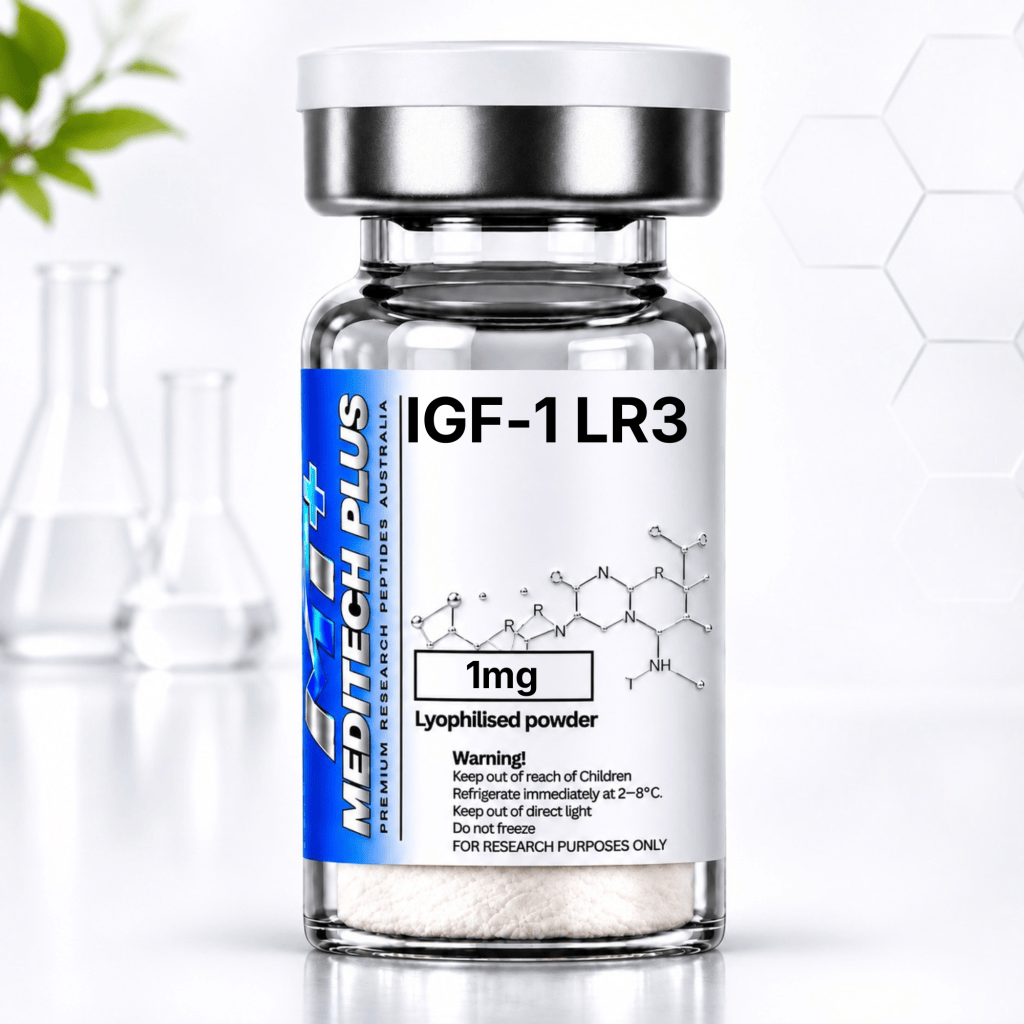
Buy IGF-1 LR3 Australia: Molecular Structure, Properties and Research Background
IGF-1 LR3, or Long R3 Insulin-Like Growth Factor-1, is a modified analogue of insulin-like growth factor 1 (IGF-1). Its structural modifications make it relevant to scientific discussions concerning peptide chemistry, growth-factor interactions and cellular signalling.
Understanding IGF-1 LR3 involves examining its molecular characteristics, the biological role of native IGF-1, the methods used to characterise peptides, and the limitations of laboratory research.
IGF-1 LR3: Technical Overview
IGF-1 LR3 differs from native IGF-1 through an amino acid substitution and an extension of its N-terminal sequence. These changes affect its interaction with IGF-binding proteins and are relevant to its biochemical properties.
The modified molecule should be distinguished from native IGF-1 and from medicines approved for specific therapeutic indications.
Product Specifications
The following fields identify the information that should be documented for any specific material described as IGF-1 LR3. Values must be confirmed against the original manufacturer’s technical documentation.
| Specification | Verified information required |
|---|---|
| Product name | IGF-1 LR3 |
| Full name | Long R3 Insulin-Like Growth Factor-1 |
| Molecular type | Modified IGF-1 analogue |
| Molecular formula | Manufacturer-confirmed value |
| Molecular weight | Manufacturer-confirmed value |
| CAS number | Confirm the identifier for the exact molecular form |
| Peptide quantity | Confirm the labelled amount |
| Purity | Report only a substantiated analytical result |
| Analytical methods | Identify the methods actually performed |
| Batch identification | Record the relevant batch or lot number |
| Storage conditions | Follow validated manufacturer documentation |
| Documentation | Applicable batch-specific analytical report |
Specifications from another supplier should not be assumed to apply to a different product or batch.
Molecular Structure of IGF-1 LR3
IGF-1 LR3 is a modified form of insulin-like growth factor 1. Its structure includes an arginine substitution at position three and an additional N-terminal sequence containing 13 amino acids.
Structural changes can affect molecular interactions, including interactions with proteins that bind native IGF-1. Researchers studying modified peptides consider these differences when evaluating molecular behaviour under defined experimental conditions.
The properties of a peptide preparation should be established through appropriate analytical methods rather than inferred solely from its product name.
Understanding the IGF-1 Signalling Pathway
Native IGF-1 is a peptide growth factor involved in cellular signalling. One of its principal receptors is the insulin-like growth factor 1 receptor, or IGF-1R.
Receptor activation can engage intracellular pathways such as PI3K/AKT and MAPK. These pathways are investigated in cell biology because they participate in cellular growth, differentiation, metabolism and survival.
Observations involving native IGF-1 should not automatically be attributed to IGF-1 LR3. Evidence must be evaluated according to the specific molecule, experimental model and conditions used.
Research Context and Scientific Limitations
Research on IGF-related signalling contributes to the understanding of cellular communication and growth-factor biology.
Interpretation requires distinguishing between biochemical observations, results from cell-based experiments, animal studies and human clinical evidence. Evidence at one level does not automatically establish a corresponding effect at another.
Laboratory findings alone cannot establish that IGF-1 LR3 is safe or effective for human use or for treating a medical condition.
Analytical Testing and Certificate of Analysis
Analytical documentation can provide information about the identity and characteristics of a peptide preparation.
High-Performance Liquid Chromatography
High-performance liquid chromatography (HPLC) separates components in a sample. Under an appropriately validated method, it can support an assessment of sample composition and an estimate of purity.
A reported purity percentage should be interpreted in the context of the method, reference standards, detection conditions and calculation used.
Mass Spectrometry
Mass spectrometry measures mass-to-charge ratios and can help characterise molecular mass. Depending on the method and supporting data, it can contribute to an assessment of molecular identity.
No single analytical result should be interpreted as proof of every quality attribute.
Certificate of Analysis
A Certificate of Analysis (CoA) may contain the batch identifier, test methods, analytical results, acceptance criteria and relevant laboratory details.
A useful report should be traceable to the material it describes. A CoA does not, by itself, establish clinical effectiveness, sterility, safety or regulatory approval.
Storage and Documentation
Storage requirements depend on the exact material, formulation, packaging and stability data. They should be taken from validated manufacturer documentation rather than generalised from information about other peptides.
Documentation should identify the material clearly, retain its relevant batch information and distinguish verified analytical results from unverified supplier statements.
Frequently Asked Questions
What is IGF-1 LR3?
IGF-1 LR3 is a modified analogue of insulin-like growth factor 1, distinguished by a specific amino acid substitution and an extended N-terminal sequence.
How does IGF-1 LR3 differ from native IGF-1?
The LR3 analogue has structural modifications that distinguish it from native IGF-1 and affect its interactions with IGF-binding proteins.
What is the IGF-1 receptor?
IGF-1R is a cell-surface receptor involved in signalling processes associated with cellular growth, differentiation and metabolism.
What does HPLC testing establish?
HPLC can help characterise sample composition. Its ability to establish purity depends on the validated method and the way results are interpreted.
What is the purpose of a Certificate of Analysis?
A CoA documents specified analytical findings for a material or batch. Its conclusions are limited to the tests and criteria reported.
Does laboratory purity prove that a peptide is safe?
No. Purity is only one aspect of characterisation. It does not independently establish sterility, safety, biological activity or suitability for human use.
What should be considered when interpreting IGF-1 LR3 research?
Researchers should consider the specific molecular form, the experimental model, the analytical methods used, the quality of the evidence and the limitations of extrapolating laboratory findings to humans.
Australian Regulatory Considerations
The legal status of a peptide depends on its ingredients, intended purpose, presentation and applicable regulatory framework. Therapeutic Goods Administration requirements may apply to importation, supply and advertising.
The TGA advises businesses to verify their obligations before promoting or supplying peptide products. A research-use disclaimer does not independently establish that a product may lawfully be supplied or advertised in Australia.
For authoritative information, consult the Therapeutic Goods Administration’s peptide guidance.
📅 Last updated:

Reviews
There are no reviews yet.