
Ageing is a complex biological process involving changes in cellular function, mitochondrial activity, protein maintenance, inflammation and tissue structure. Scientists are investigating whether particular molecules can help explain these changes and identify potential targets for future therapies.
Peptides have attracted research interest because they can interact with receptors, proteins and signalling pathways involved in biological processes. Some are being studied in connection with skin ageing, while others are investigated for their relationship to mitochondrial function, cellular senescence or tissue repair.
But an important distinction remains: a peptide being investigated for an ageing-related mechanism does not mean it has been proven to slow human ageing or extend lifespan.
This guide explores 10 peptides discussed in ageing-related research, explains their proposed scientific roles, and examines the limitations of the available evidence. Lets break down 10 Peptides Used in Anti-Aging Research
What Are Peptides in Anti-Aging Research?
Peptides are short chains of amino acids connected by peptide bonds. Naturally occurring peptides can act as signalling molecules, hormones, or components of biological regulatory systems. Researchers can also synthesise or modify peptides to investigate particular molecular interactions.
In ageing research, peptides are studied across several areas:
- Skin ageing: Collagen-related pathways, extracellular matrix remodelling and skin structure.
- Mitochondrial function: Cellular energy production, oxidative stress and mitochondrial signalling.
- Cellular senescence: The study of cells that stop dividing but remain biologically active.
- Inflammatory signalling: Molecular pathways involved in regulating inflammatory responses.
- Tissue biology: Cellular repair mechanisms and changes in tissue function.
These research areas are related, but they are not interchangeable. A finding involving skin appearance, for example, cannot establish that a compound improves whole-body healthspan or increases longevity.
1. GHK-Cu: A Copper-Binding Peptide Studied in Skin Ageing
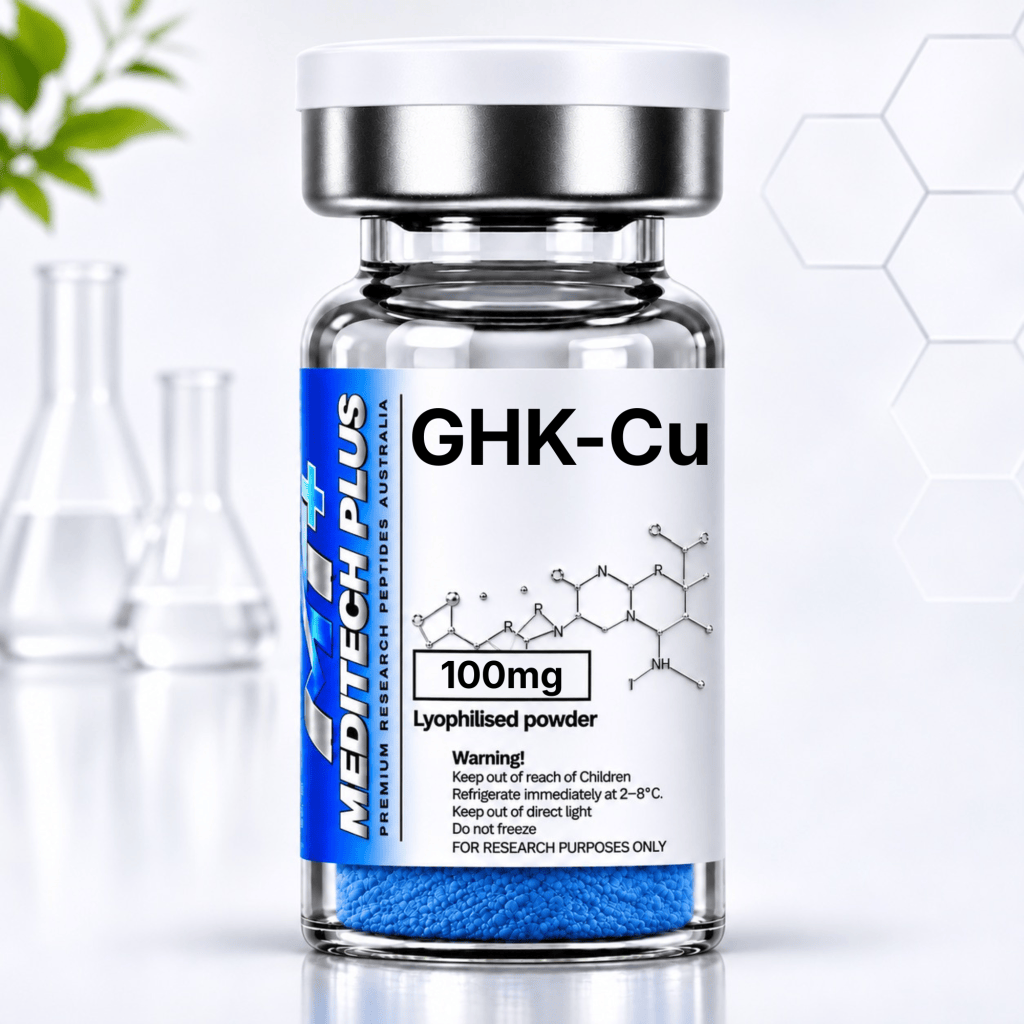
GHK-Cu is a copper-binding complex of the naturally occurring tripeptide glycyl-L-histidyl-L-lysine. It has attracted interest in skin biology because of its reported interactions with extracellular matrix remodelling, inflammatory signalling and tissue-related processes.
What does research investigate?
Researchers have examined GHK-Cu in relation to collagen-associated pathways, matrix metalloproteinases, oxidative processes and cellular responses involved in skin maintenance. These mechanisms are relevant to understanding changes in skin structure that occur with age.
A 2022 review described the potential of GHK and GHK-Cu in ageing-related research, drawing largely on experimental and preclinical findings. More recent reviews have also highlighted the need for better-characterised formulations and stronger clinical studies.
What does the evidence show?
The evidence includes laboratory experiments, animal studies and a limited number of human cosmetic studies. Results depend on the formulation, delivery method, study design and outcome being measured.
A small clinical study of topical copper tripeptide products after laser resurfacing did not find significant differences in objective wrinkle or overall skin-quality assessments, although some participants reported improvements. This illustrates why mechanistic findings and cosmetic claims must be evaluated separately.
Research takeaway: GHK-Cu is relevant to research into skin structure and tissue remodelling, but its effects should not be generalised to whole-body anti-ageing or longevity.
Scientific reference: The potential of GHK as an anti-aging peptide — PubMed.
2. Epithalon: Research Into Telomeres and Cellular Ageing

Epitalon, also written as Epithalon, is a synthetic tetrapeptide commonly described by the sequence Ala-Glu-Asp-Gly. It has been discussed in experimental research involving telomere biology, circadian regulation and other ageing-related processes.
Why is it studied?
Telomeres are protective structures at the ends of chromosomes. Their biology is relevant to cellular ageing, although telomere length alone does not determine an individual’s biological age or lifespan.
Research involving Epitalon has explored possible relationships with telomerase-associated mechanisms, gene regulation and physiological rhythms. These investigations are part of a wider scientific effort to understand how cellular maintenance processes change with age.
What does the evidence show?
The evidence remains limited. Some findings come from experimental models or older studies, and the quality and reproducibility of the available research vary.
There is no adequately established clinical evidence demonstrating that Epitalon extends human lifespan or reliably reverses biological ageing. Questions about long-term safety, pharmacology and clinical effectiveness also remain unresolved.
Research takeaway: Epitalon is an investigational peptide of interest in telomere and ageing biology, not a proven longevity treatment.
Scientific background: Epitalon and Epithalamin: A Narrative Review of Mechanistic, Preclinical, and Clinical Evidence — PubMed.
3. MOTS-c: A Mitochondrial-Derived Peptide

MOTS-c stands for mitochondrial open reading frame of the 12S rRNA-c. It is a mitochondrial-derived peptide that has attracted interest in research involving cellular metabolism, stress responses and age-related physiological changes.
What does research investigate?
Mitochondria are cellular structures involved in energy production and several signalling processes. Mitochondrial function can change with age, making mitochondrial-derived signals an important subject of biological research.
Experimental studies have examined MOTS-c in relation to metabolic regulation, cellular stress responses and pathways associated with energy balance.
What does the evidence show?
Much of the research is preclinical. Findings from cells and animal models can help researchers identify potential mechanisms, but they do not establish that MOTS-c improves metabolic health or slows ageing in humans.
Further work is needed to clarify its biological actions, pharmacology, safety and relevance to human ageing.
Research takeaway: MOTS-c is an emerging subject in mitochondrial and metabolic ageing research, with human benefits still unproven.
Scientific background: Simple molecules make difference: short peptides play a novel role in slowing senescence — npj Aging.
4. Humanin: A Mitochondrial-Derived Peptide Associated With Cell Survival Research
Humanin is another mitochondrial-derived peptide investigated for its relationship to cellular stress and survival pathways.
Why is it studied?
Cellular stress, protein damage and changes in energy metabolism are important subjects in ageing biology. Humanin has been studied in experimental systems for its interactions with pathways associated with cell survival and stress responses.
These investigations may help researchers understand how cells respond to conditions associated with age-related decline.
What does the evidence show?
The evidence is primarily experimental, and important questions remain about the peptide’s physiological role, its mechanisms and the extent to which laboratory findings translate into human outcomes.
Humanin should not be described as a proven treatment for neurodegeneration, age-related disease or longevity.
Research takeaway: Humanin offers a research avenue for understanding mitochondrial signalling and cellular stress, rather than an established anti-ageing intervention.
Scientific context: npj Aging — research on short peptides and cellular senescence.
5. SS-31 (Elamipretide): A Peptide Investigated for Mitochondrial Function
SS-31, also known as elamipretide, is a mitochondria-targeted tetrapeptide studied for its interactions with mitochondrial membranes and cellular energy processes.
Why is it relevant to ageing research?
Mitochondrial dysfunction is one of the biological changes investigated in age-related decline. Mitochondria contribute to ATP production, cellular metabolism and the regulation of oxidative processes.
Researchers have examined whether SS-31 can influence mitochondrial energetics and related functional changes in experimental models.
What does the evidence show?
A study in aged mice reported improvements in measured mitochondrial energetics and skeletal muscle performance following experimental treatment. Subsequent work has investigated mitochondrial function and other physiological outcomes.
Animal findings do not establish that the same effects occur in humans or that a peptide extends lifespan. Elamipretide’s clinical development for particular medical conditions must also be distinguished from claims about general anti-ageing.
Research takeaway: SS-31 is an important example of how mitochondrial-targeted peptides are investigated, but evidence for general human longevity benefits remains insufficient.
Scientific reference: Mitochondrial-targeted peptide rapidly improves mitochondrial energetics and skeletal muscle performance in aged mice — PubMed.
6. FOXO4-DRI: Experimental Research Into Cellular Senescence
FOXO4-DRI is an experimental peptide developed to investigate mechanisms associated with cellular senescence.
What is cellular senescence?
Senescent cells no longer divide normally but can remain metabolically active. Some release signalling molecules that influence neighbouring cells and tissue environments. Researchers study these processes because senescence is associated with several aspects of ageing and age-related disease.
Why is FOXO4-DRI studied?
FOXO4-DRI was designed to interfere with a molecular interaction involving FOXO4 and p53, a protein associated with cellular stress responses and cell-cycle regulation.
Research has investigated whether modifying this interaction can selectively affect certain senescent cells in experimental models.
What does the evidence show?
The foundational evidence is preclinical. Results in experimental models do not establish that FOXO4-DRI is safe, selective or effective in humans.
Cellular senescence also has normal biological roles, including aspects of tissue maintenance and wound responses. Interfering with these processes requires careful investigation.
Research takeaway: FOXO4-DRI is a tool for studying senescence-related biology, not an established anti-ageing therapy.
7. BPC-157: Experimental Research Into Tissue Repair

BPC-157 is a synthetic peptide that has been investigated in experimental studies involving tissue repair, inflammation and related biological pathways.
What does research investigate?
Published preclinical research has examined BPC-157 in several tissue-injury models. These studies explore cellular responses, vascular processes and other mechanisms that may contribute to tissue biology.
The relationship to ageing is indirect: understanding tissue repair can be relevant to studying age-related changes, but a compound investigated in injury models is not automatically an anti-ageing compound.
What does the evidence show?
The available evidence is dominated by animal and laboratory research, with insufficient high-quality human evidence to establish broad clinical benefits.
Claims that BPC-157 reverses ageing, prevents age-related disease or reliably accelerates recovery in humans are not supported by the current evidence base.
Research takeaway: BPC-157 is an experimental subject in tissue-repair research, but its relevance to healthy ageing remains uncertain.
8. TB-500: Investigating Peptide-Related Tissue Biology

BPC-157 + TB-500 Recovery Bundle


In stock
TB-500 is a name used in commercial contexts for products associated with thymosin beta-4-related research. The exact identity and composition of a product marketed under this name should not be assumed without documentation.
What does the research examine?
Thymosin beta-4 is a naturally occurring peptide involved in actin-related cellular processes. Scientific investigations have examined its role in cell movement, tissue responses and repair-associated biology.
These mechanisms may be relevant to understanding tissue maintenance, but research on thymosin beta-4 cannot automatically be applied to every product labelled TB-500.
What does the evidence show?
The evidence varies according to the molecule, formulation, experimental model and outcome. Preclinical findings do not establish that commercially marketed TB-500 products are effective or safe for humans.
Research takeaway: Research involving thymosin beta-4-related biology should be distinguished from claims about unverified TB-500 products or general longevity.
9. CJC-1295: Research Into Growth Hormone Signalling
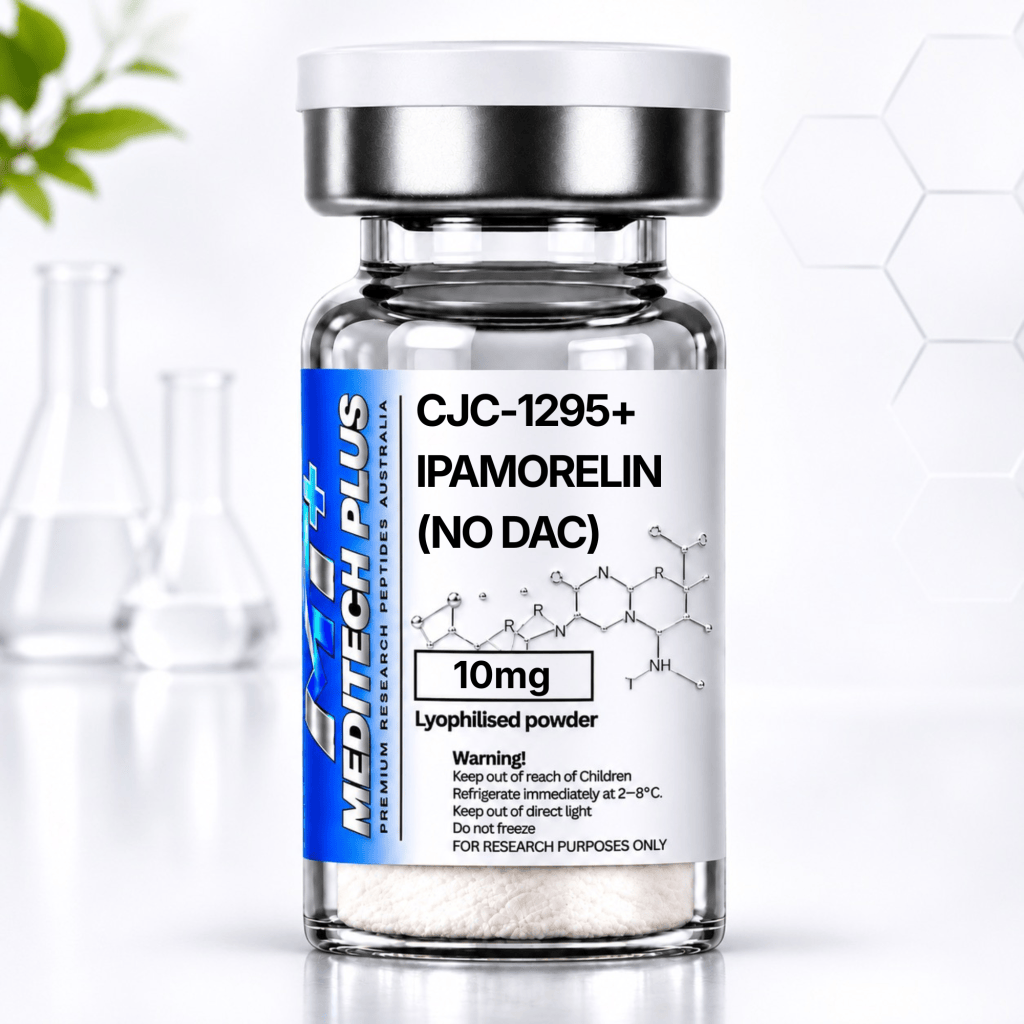
CJC-1295 is a synthetic peptide analogue studied for its effects on growth hormone-releasing hormone pathways.
Why is it discussed in ageing research?
Growth hormone and the insulin-like growth factor system change with age and are involved in several physiological processes. These changes have prompted scientific interest in how endocrine signalling relates to body composition, metabolism and age-associated function.
However, the relationship between hormone levels and healthy ageing is complex. Altering a hormone pathway does not necessarily improve healthspan or reduce the risk of age-related disease.
What does the evidence show?
Human studies have examined the pharmacological effects of CJC-1295 on growth hormone and related hormone levels. These findings do not demonstrate that it reverses ageing or extends human lifespan.
Potential endocrine effects and long-term safety require careful assessment. Hormonal changes should not be treated as a substitute for evidence of meaningful clinical outcomes.
Research takeaway: CJC-1295 is relevant to endocrine pharmacology research, but it is not established as a human longevity intervention.
10. Ipamorelin: Research Into Growth Hormone-Releasing Pathways

Ipamorelin is a synthetic peptide that acts on the growth hormone secretagogue receptor. It has been investigated for its ability to stimulate growth hormone release in experimental settings.
What does research investigate?
Research into ipamorelin concerns endocrine signalling and the regulation of growth hormone secretion. These topics intersect with ageing research because hormone levels and body composition can change over time.
However, growth hormone secretion is only one part of a complex physiological system. Raising a hormone level does not prove that an intervention improves healthy lifespan.
What does the evidence show?
The evidence does not establish ipamorelin as an effective or safe treatment for general human ageing. Claims about longevity, muscle preservation or age reversal require direct clinical evidence and should not be inferred from a pharmacological mechanism alone.
Research takeaway: Ipamorelin is a research subject in growth hormone signalling, not a proven anti-ageing treatment.
Comparing the 10 Peptides: Research Areas and Evidence
| Peptide | Main research area | General evidence limitation |
|---|---|---|
| GHK-Cu | Skin biology and matrix remodelling | Limited and formulation-dependent human evidence |
| Epitalon | Telomere biology and cellular ageing | Insufficient robust clinical evidence |
| MOTS-c | Mitochondrial and metabolic signalling | Predominantly preclinical evidence |
| Humanin | Cellular stress and survival pathways | Human longevity benefits unproven |
| SS-31 | Mitochondrial function | Experimental ageing findings do not establish general longevity benefits |
| FOXO4-DRI | Cellular senescence | Preclinical evidence; human safety and efficacy unestablished |
| BPC-157 | Tissue-repair biology | Limited high-quality human evidence |
| TB-500 | Thymosin beta-4-related research | Product identity and human evidence require careful verification |
| CJC-1295 | Growth hormone signalling | Hormone changes do not establish anti-ageing benefits |
| Ipamorelin | Growth hormone secretion | No established evidence for extending human lifespan |
This is a qualitative overview of the research areas, not a ranking of effectiveness or safety. The peptides differ substantially in molecular identity, intended research context and amount of available evidence.
What Does the Science Actually Say About Peptides and Longevity?
Ageing involves many interacting biological processes. A compound that influences one pathway may not affect other ageing mechanisms, and a measurable change in a laboratory marker does not necessarily translate into a meaningful improvement in health.
A useful way to interpret the evidence is to separate three levels:
1. Laboratory and mechanistic evidence
Cell experiments can identify molecular interactions and generate hypotheses. They cannot independently establish safety or clinical effectiveness in humans.
2. Animal research
Animal studies can investigate complex biological responses and help guide further research. Differences between species, study conditions and treatment exposures limit how directly results can be applied to people.
3. Human clinical evidence
Well-designed clinical studies are needed to determine whether a particular intervention produces meaningful benefits and what risks it may carry. Long-term longevity claims require particularly strong evidence and extended follow-up.
For most experimental peptides discussed in anti-ageing contexts, evidence remains insufficient to establish that they extend human lifespan.
Safety and Australian Regulatory Considerations
Peptides promoted online for anti-ageing may be subject to Australian therapeutic-goods laws depending on their composition, intended purpose and how they are advertised.
The Therapeutic Goods Administration (TGA) warns that many peptide products promoted online are unapproved therapeutic goods. Such products have not necessarily been assessed for safety, quality or effectiveness, and their composition, labelling or sterility may be uncertain.
The TGA also states that advertising unapproved therapeutic goods to the Australian public is generally unlawful, subject to applicable exceptions and authorisations. A research-use disclaimer does not automatically remove these obligations.
Readers should not interpret this educational article as a recommendation to purchase, inject or use experimental peptides. Anyone considering a health intervention should consult an appropriately qualified healthcare professional and rely on authorised, evidence-based care.
For current information, consult the TGA’s official peptide product guidance.
Frequently Asked Questions
What are the most researched peptides in anti-ageing science?
There is no universally accepted ranking. Peptides such as GHK-Cu, SS-31, MOTS-c and Epitalon appear in research discussions involving skin biology, mitochondria, metabolism or cellular ageing, but the depth and quality of evidence vary considerably.
Can peptides reverse ageing?
There is no established evidence that the experimental peptides in this article reverse human ageing or reliably extend human lifespan. Findings from cells or animals are not proof of human benefits.
Is GHK-Cu the same as Epitalon?
No. GHK-Cu is a copper-binding tripeptide complex, while Epitalon is a synthetic tetrapeptide. They have different molecular characteristics and research contexts.
Why are mitochondria important in ageing research?
Mitochondria contribute to cellular energy production and signalling. Changes in mitochondrial function are studied as one component of the complex biology associated with ageing.
Does a peptide’s proposed mechanism prove that it works?
No. A plausible mechanism helps researchers develop hypotheses, but effectiveness and safety must be established through appropriate experimental and clinical evidence.
Are experimental peptides approved for anti-ageing use in Australia?
Approval cannot be assumed from a product’s online availability or marketing claims. The status of each product must be checked against the TGA’s requirements and relevant Australian regulatory records.
What is the difference between lifespan and healthspan?
Lifespan refers to how long a person lives. Healthspan refers to the period of life spent in relatively good health, without significant disease or disability. Research findings about a biological marker do not automatically establish improvements in either outcome.
Conclusion
Peptides provide researchers with diverse tools for investigating skin biology, mitochondrial function, cellular senescence, tissue responses and endocrine signalling. These areas may help scientists understand aspects of ageing and identify questions for future research.
However, the 10 peptides discussed here are not interchangeable, and their evidence bases differ substantially. Many findings remain preclinical, and proposed mechanisms should not be mistaken for proven human outcomes.
The most scientifically responsible approach is to evaluate each peptide according to its molecular identity, the quality of its evidence, its safety profile and its regulatory status. Progress in ageing research depends not on bold claims, but on reproducible findings and well-designed studies that demonstrate meaningful benefits.
📅 Last updated: